Process
Architecture is built from ordinary materials. Furniture rarely is. Madman Studio exists somewhere between those two worlds.
Every Madman Studio piece begins with a question rather than a drawing. There is no predetermined aesthetic or formula. Each object develops its own narrative through experimentation with material, proportion, and structure. The resulting collection is unified not by a repeated style, but by a common language: architectural lumber, expressive geometry, and honest construction.
The process is one of transformation—allowing familiar materials to become something entirely unexpected without disguising what they are.
01 — MATERIAL
Common Materials. Uncommon Purpose.
Most furniture begins with carefully selected hardwoods chosen specifically for furniture making. Madman Studio begins somewhere much more ordinary.
Every day, architecture is constructed from dimensional lumber—2×2 furring strips, 2×4 studs, 2×8 floor joists, beams built from stacked members, fence posts, and construction-grade timber. These pieces are designed with incredible efficiency and precision, yet once a building is complete they disappear behind drywall forever.
To an architectural designer, these hidden structures possess the same beauty as the finest walnut or white oak. Their proportions are deliberate. Their dimensions are standardized. Their purpose is clear.
Madman Studio simply asks a different question:
What happens when the hidden structure becomes the finished object?
By working with lumber in its existing architectural dimensions, the material requires very little machining. The units already exist. Their proportions are already resolved. Rather than milling the material into something else, the design works with what already exists.
The result is a process that reduces waste, minimizes unnecessary manufacturing, and celebrates a material that is often overlooked.
02 — FORM
Designing Through Assembly
Furniture often begins with a familiar typology—a chair, a table, a cabinet—and then works within established conventions.
Madman Studio approaches form more fluidly.
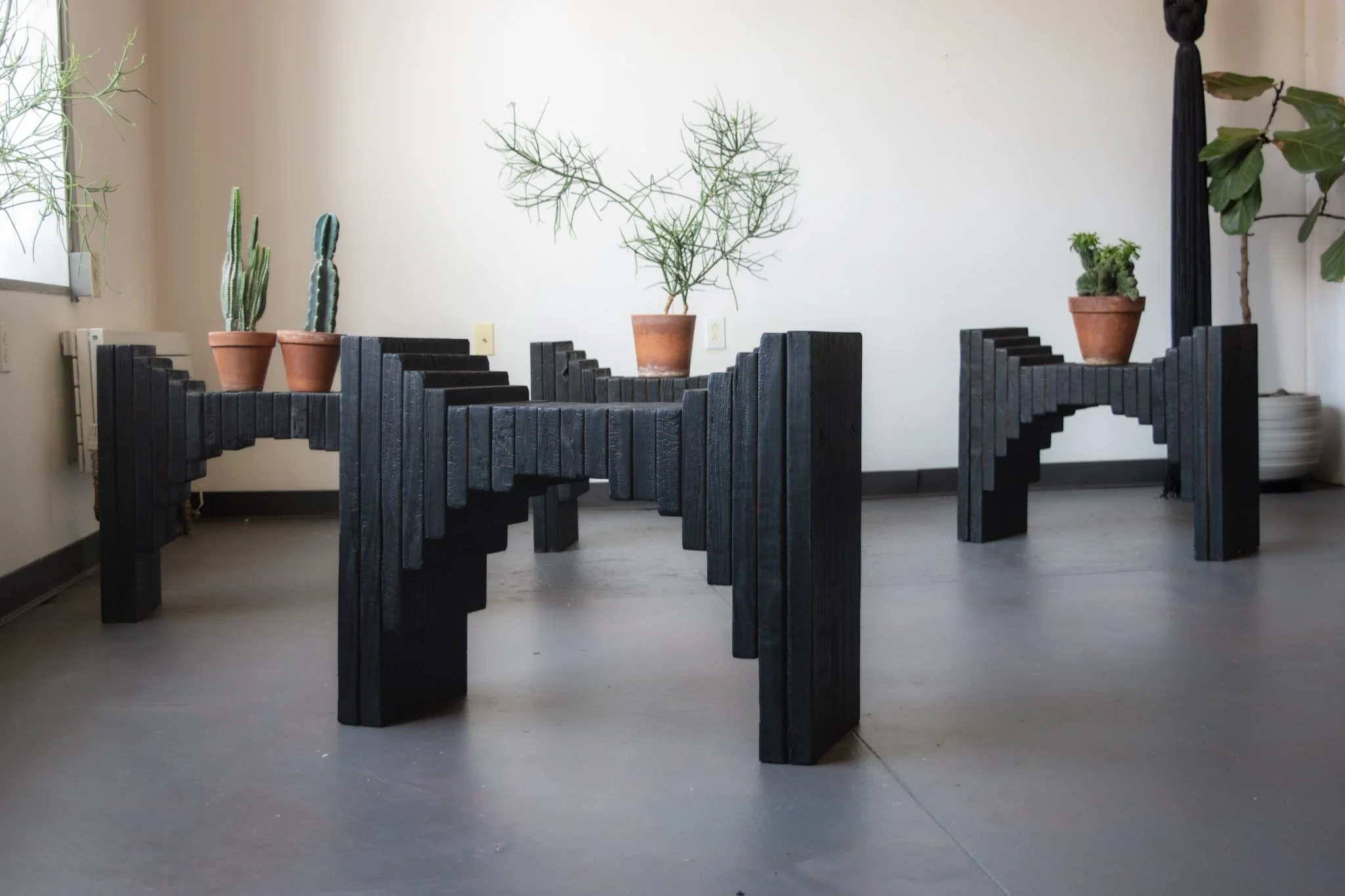
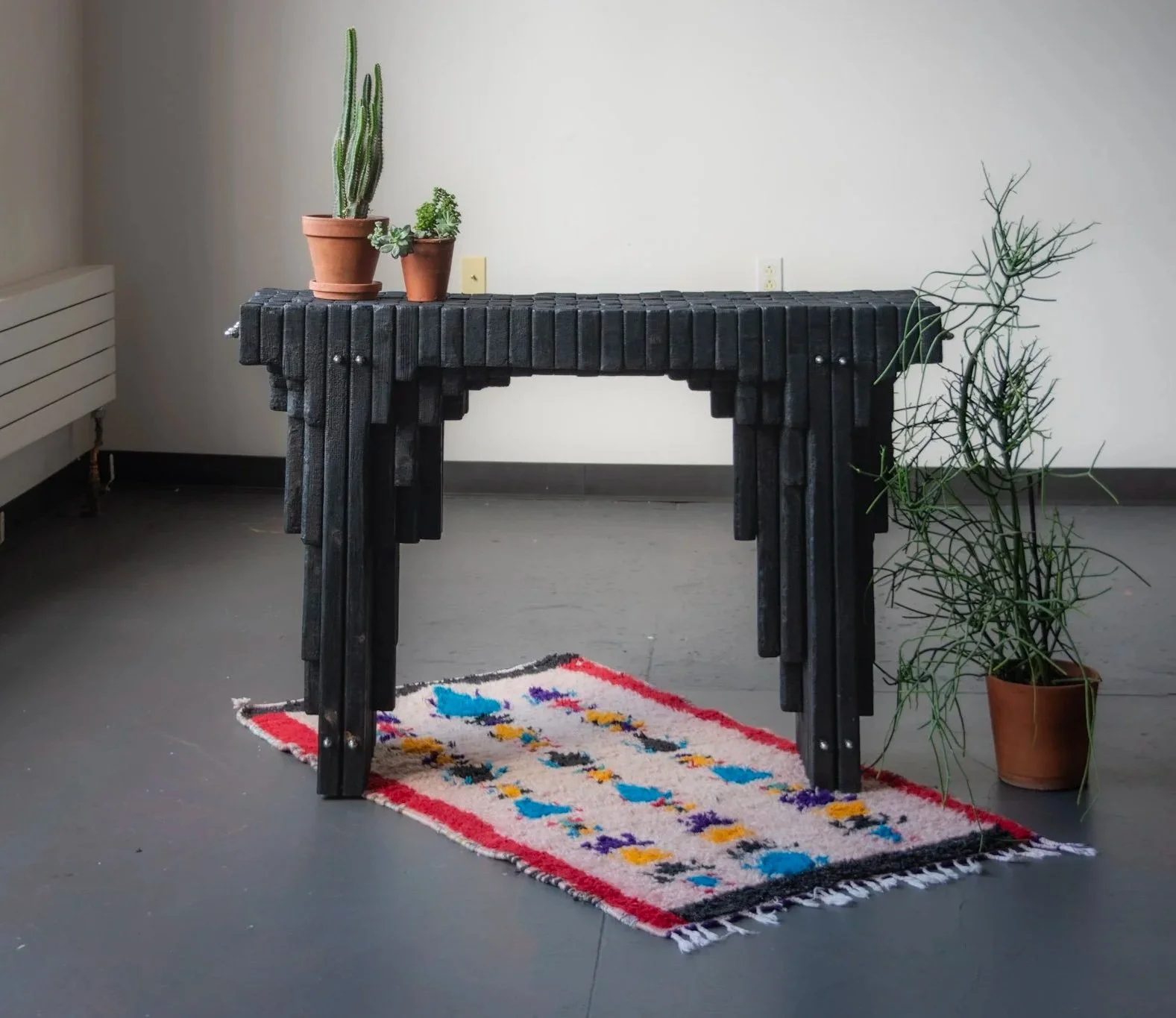
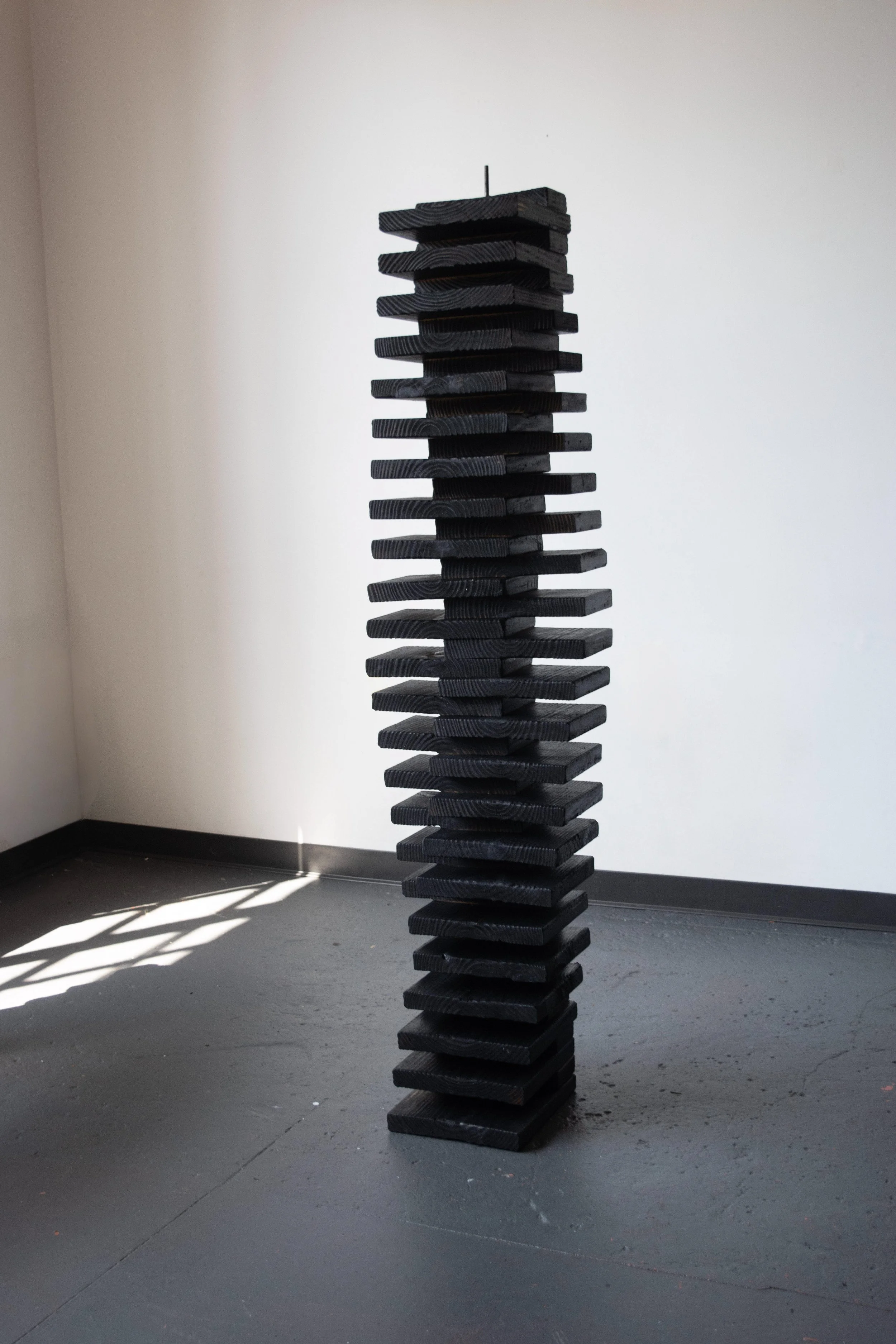
Every piece develops independently, finding its own balance through experimentation, composition, and narrative. Geometry is intentionally simple yet expressive. Heavy forms appear to float. Blocks stack into unexpected relationships. Arches, proportion, and rhythm reference architecture more than traditional furniture.
The earliest inspiration came from one overlooked surface of wood:
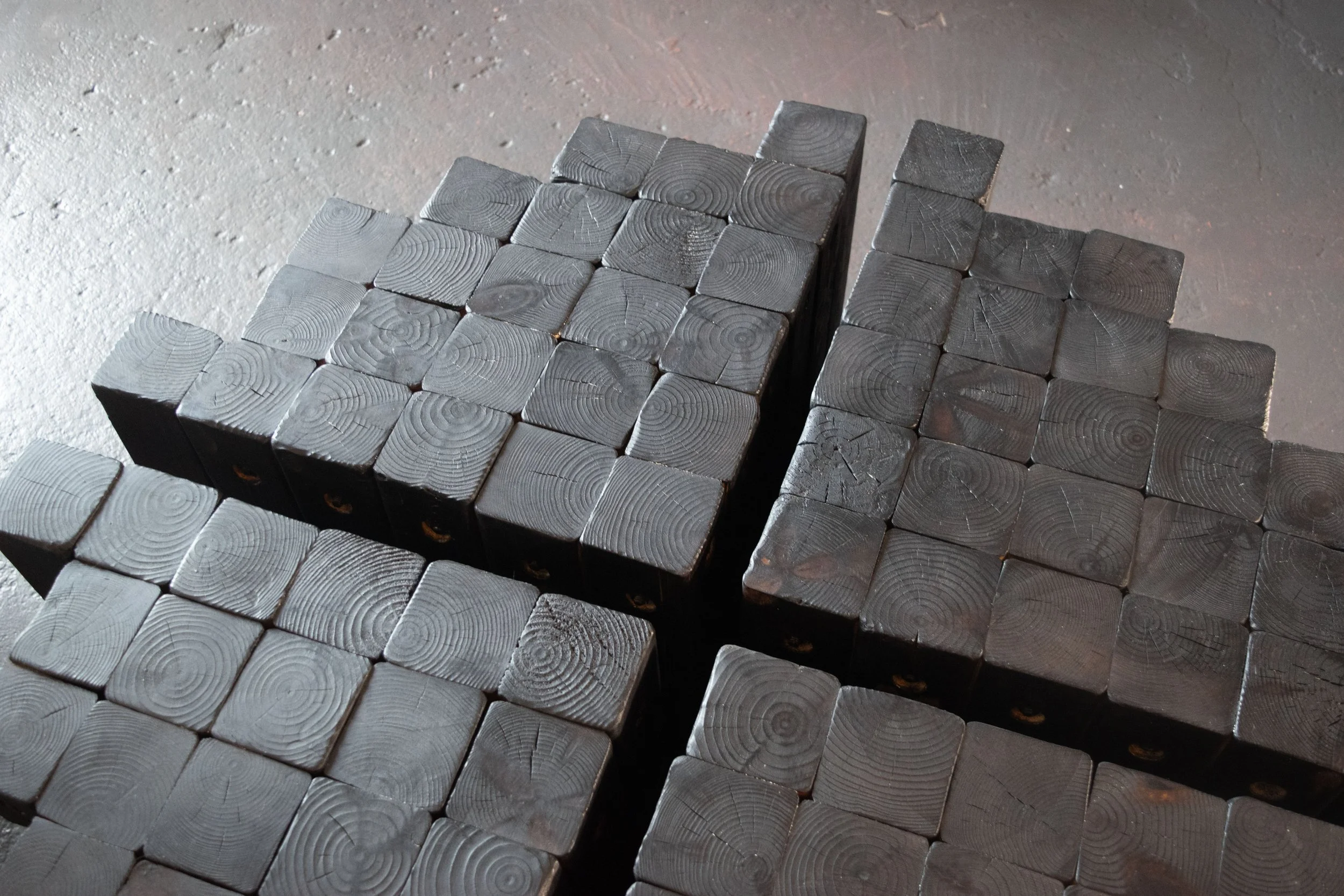
End grain.
The end grain reveals the life of the tree—growth rings, imperfections, years of expansion and drought, time itself. Rather than hiding this surface, the collection celebrates it.
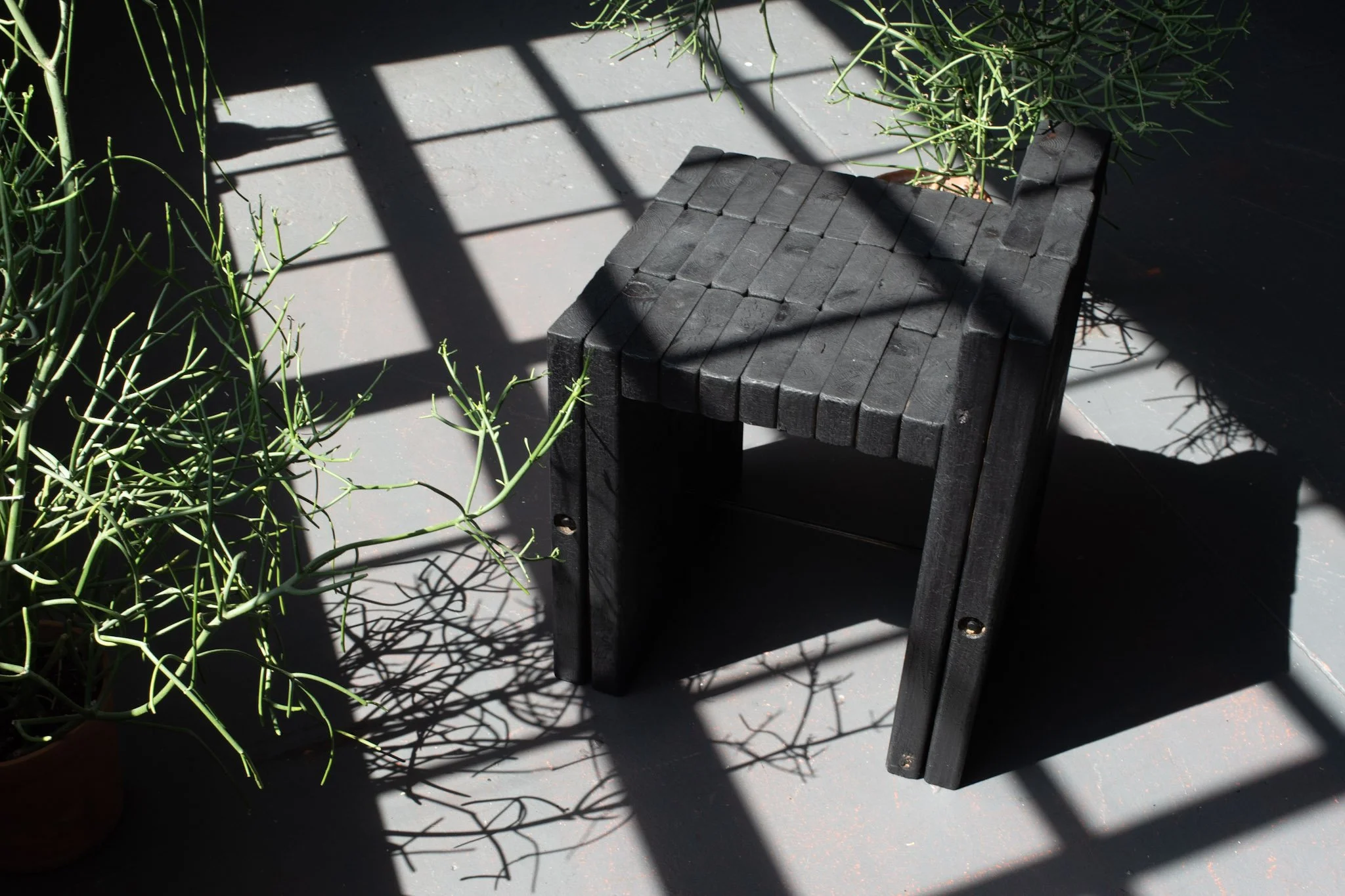
The first work, Portico Mantel, grew from observations of basalt columns and geological formations. Soon after came the rest of the collection where hundreds of exposed end-grain blocks created a surface that is impossible to repeat. Each composition becomes unique, shaped by the available material and its natural variation.
Even prototypes follow this philosophy. Offcuts and construction scraps from building sites become opportunities rather than waste. Their lengths and quantities influence the final composition, allowing each piece to emerge from the material itself instead of forcing the material into a predetermined design.
03 — STRUCTURE
Built Through Compression, Not Adhesion
Madman Studio rejects the assumption that wood must be permanently glued or “joined” together.
Wood is a living material. It expands with humidity, contracts with dry air, and continues moving throughout its life. Glue attempts to resist that movement.
Instead, every piece is organized around an internal steel skeleton.
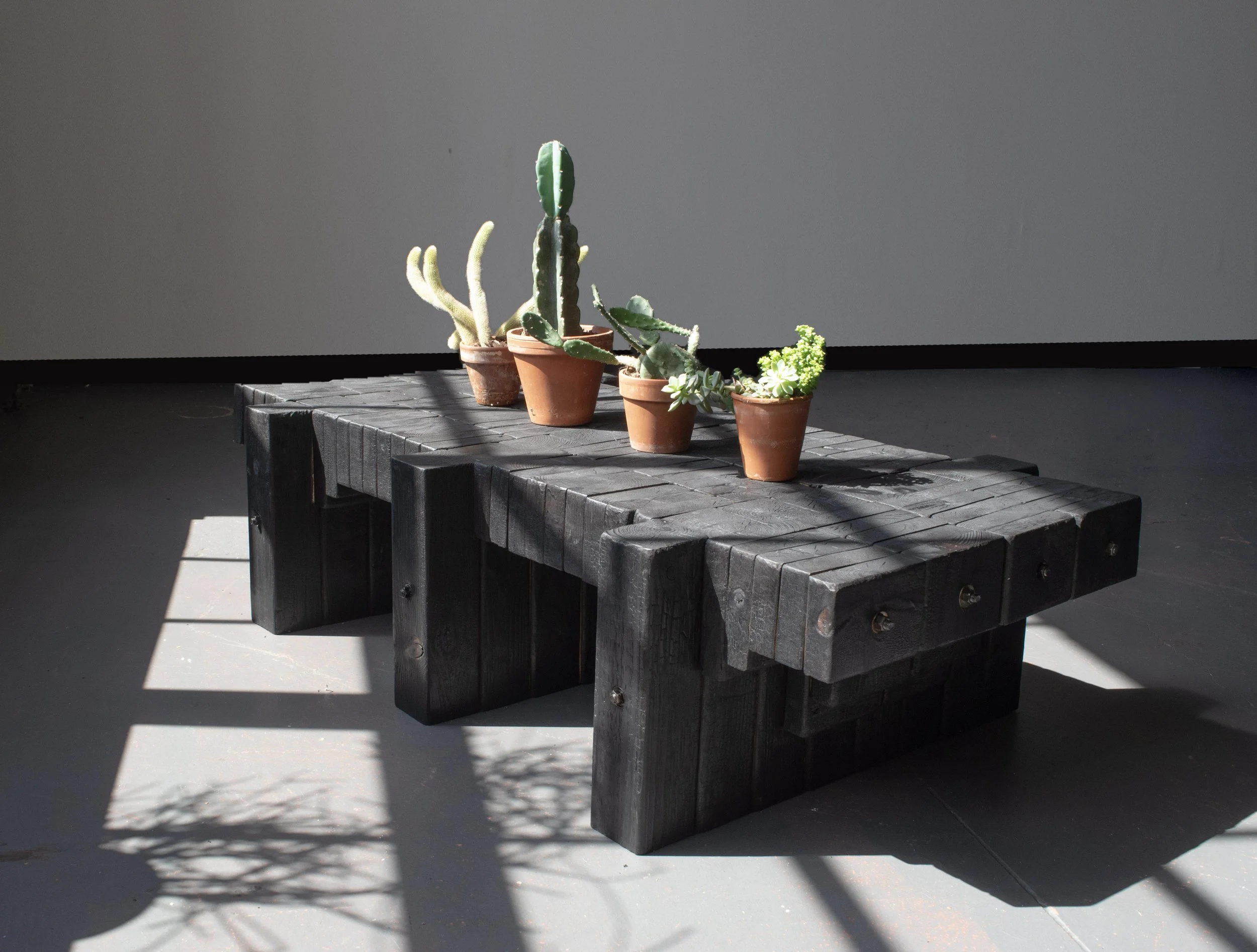
Each wooden element is drilled, threaded onto concealed steel rods, and compressed together using mechanical fasteners. Rather than relying on adhesive, the furniture is held together through controlled tension and internal friction.
The wood remains free to breathe naturally while the steel provides structural integrity.
This approach also allows each assembled piece to be charred as a complete object. Fire softens exposed corners, burns across joints continuously, and creates a protective shell around the exterior while preserving the natural wood beneath.
The result is a construction method that is honest, repairable, durable, and true to the nature of both materials.
04 — PRESERVATION
Fire as a Finishing Process
Traditional woodworking relies on extensive sanding and refinement to create a perfect surface.
Madman Studio takes a different approach.
Because each piece consists of hundreds of individual elements, subtle irregularities become part of the character of the work. Rather than removing these qualities, the surface is transformed through fire using the Japanese preservation technique known as Shou Sugi Ban.
Burning does more than darken the wood.
The flame removes sharp edges, softens transitions between individual components, and creates a protective carbon layer that increases durability.
Construction lumber is rarely considered a premium furniture material because pine is relatively soft. Charring fundamentally changes its surface characteristics, improving resistance to weathering, wear, insects, and moisture while revealing a finish that feels both ancient and contemporary.
Fire becomes both a practical process and a symbolic one.
An ordinary material is transformed into something enduring.
OBJECTIVE
Architecture, Reimagined
Madman Studio exists to challenge assumptions.
That construction lumber cannot be collectible.
That structure should remain hidden.
That furniture must conform to familiar forms.
Every piece begins with ordinary architectural material and ends as an object that celebrates craft, permanence, and the beauty of construction itself.
Nothing is disguised.
The lumber remains recognizable.
The joinery remains honest.
The geometry remains simple.
What changes is our perception of what those materials can become.
Common materials. Uncommon furniture.